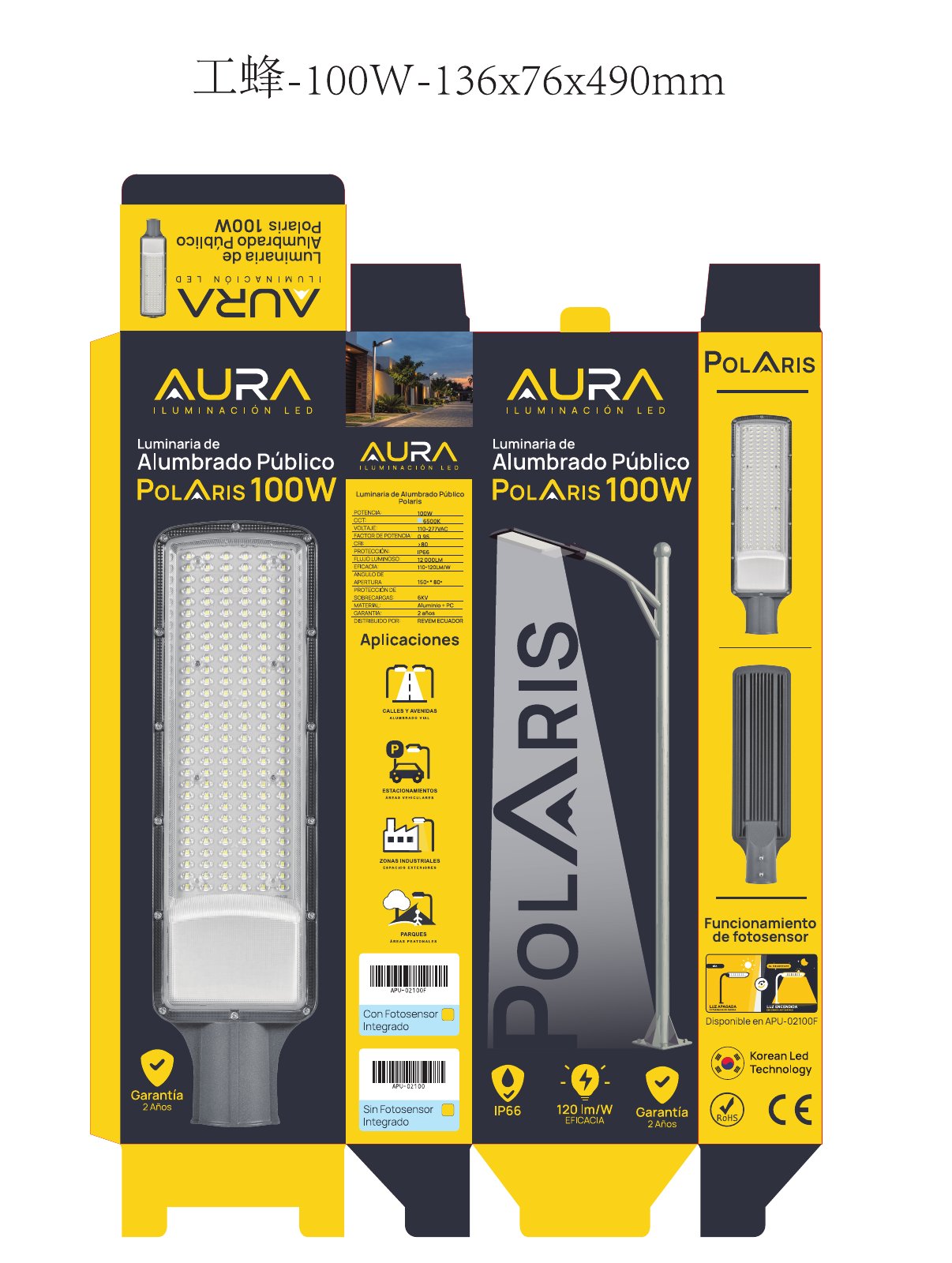
The problem
A new company selling hundreds of luminaires (streetlights, floodlights, panels, LED strips, aluminium profiles, decorative lamps) to contractors, specifiers and online buyers, with nothing to present them with.
The first materials were made by hand. A change to one product's specs meant editing the catalog, the spec sheet, the box and the label separately. A single offer for a customer took me about three days to put together.
My role
First designer, from January 2025. Promoted to Director of Design & Marketing in January 2026. I worked with sales, purchasing and our factories in China.
- Both brands, from zero: Revem and Aura Iluminación LED
- Product data model and the 514-SKU master
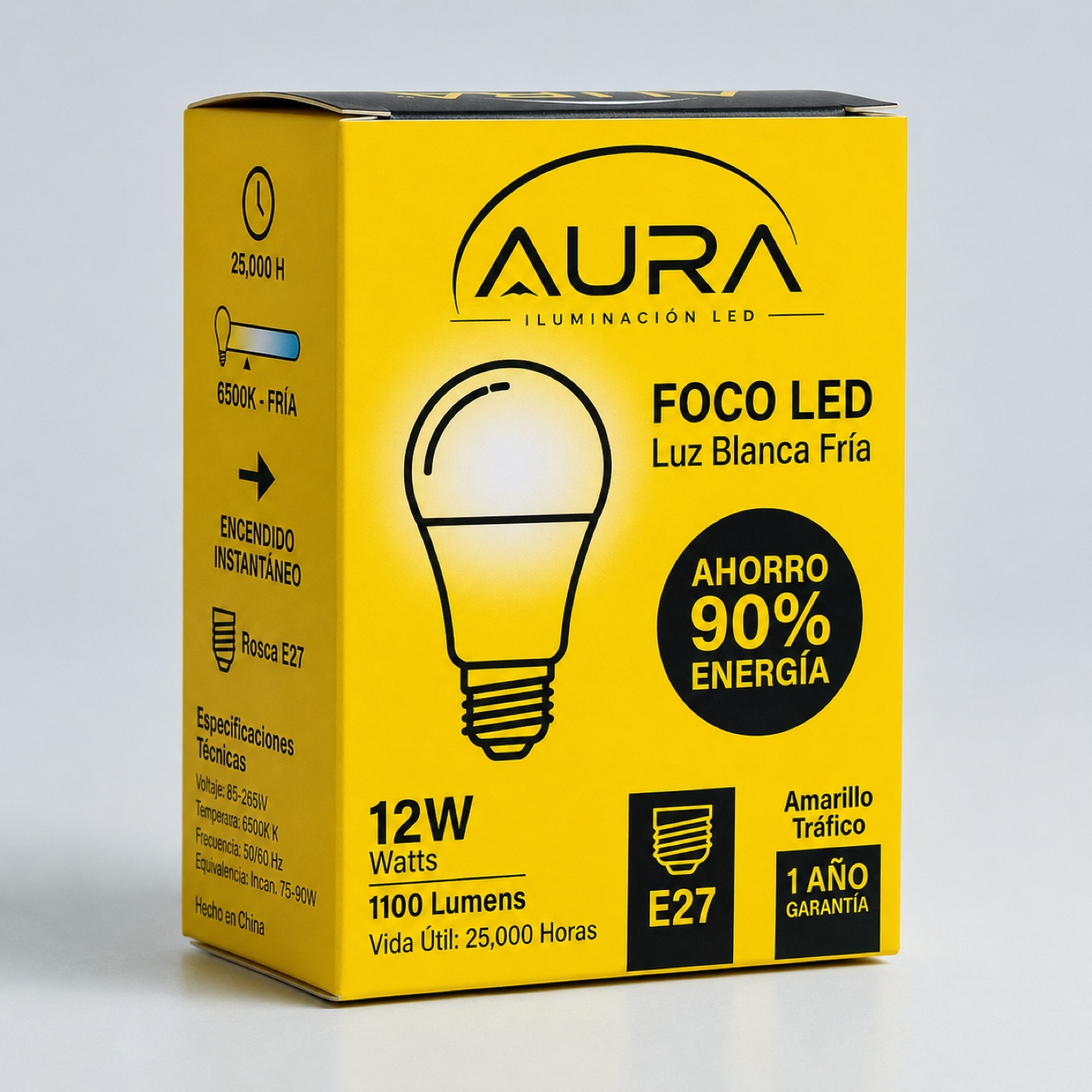
- Catalog system, spec sheets, packaging and label standard
- QR traceability system, built in Python
- AI product imagery for pre-sales, before stock had arrived
The system
Everything starts in one table. Nothing downstream is typed by hand.
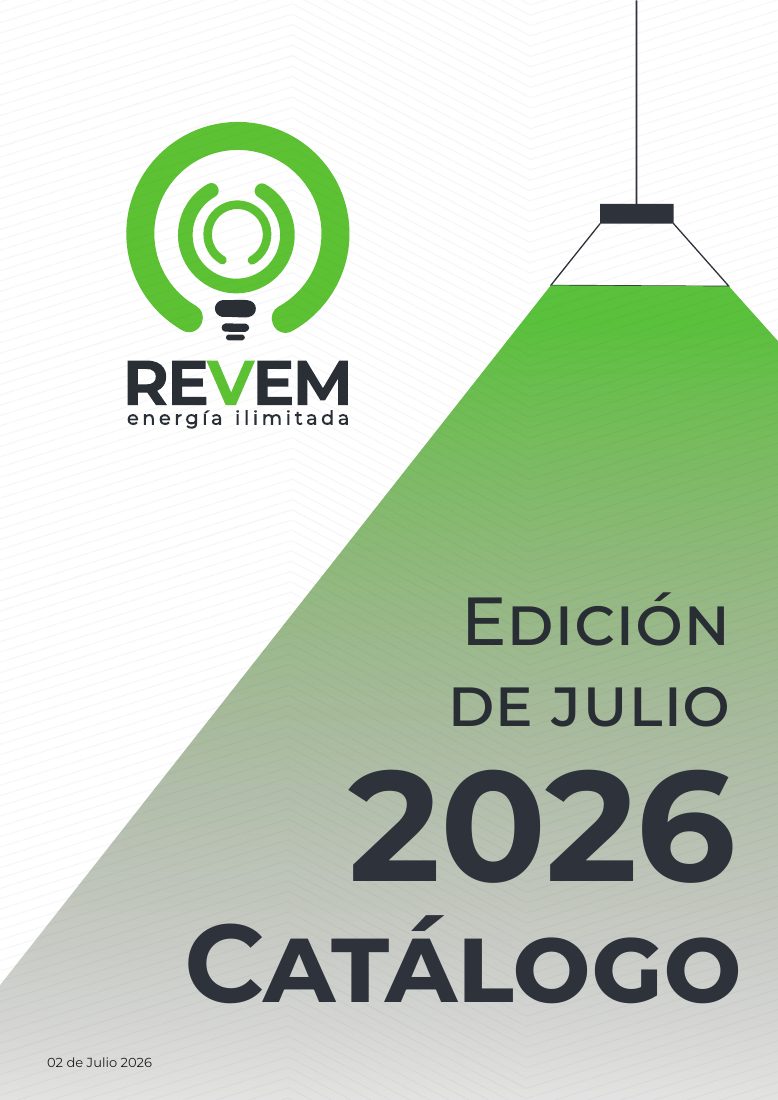
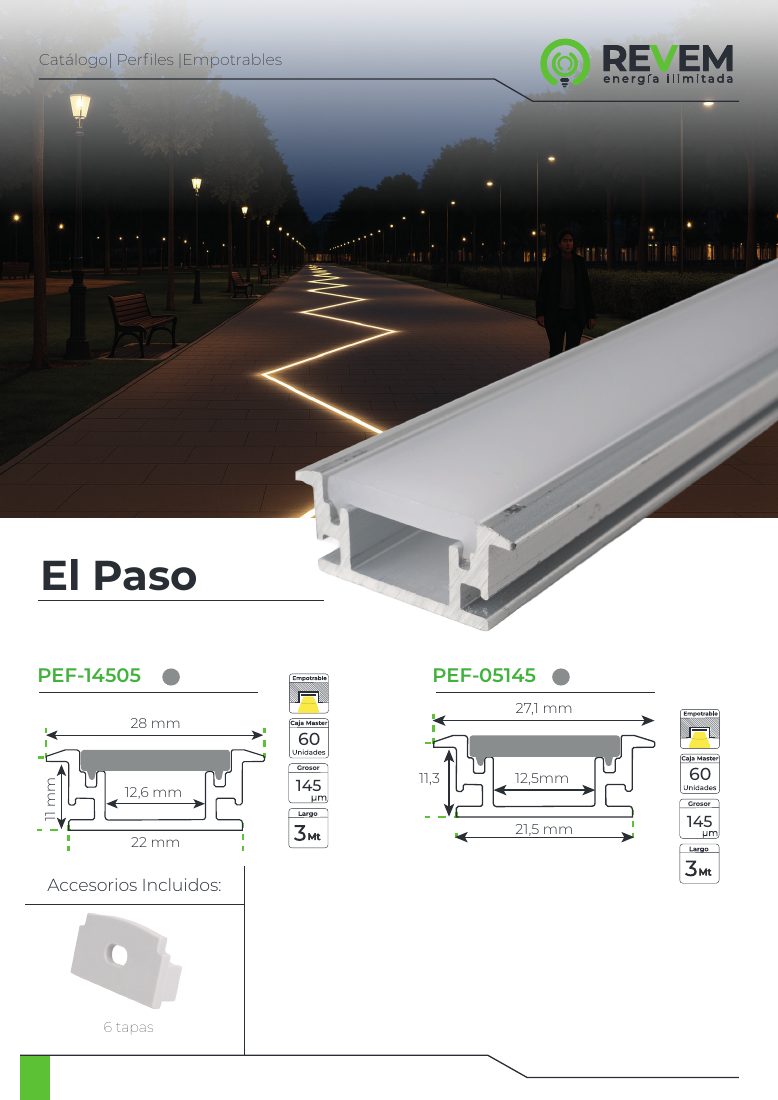
- CatalogsTechnical (227 pp), profiles, projects ES/EN, decorative
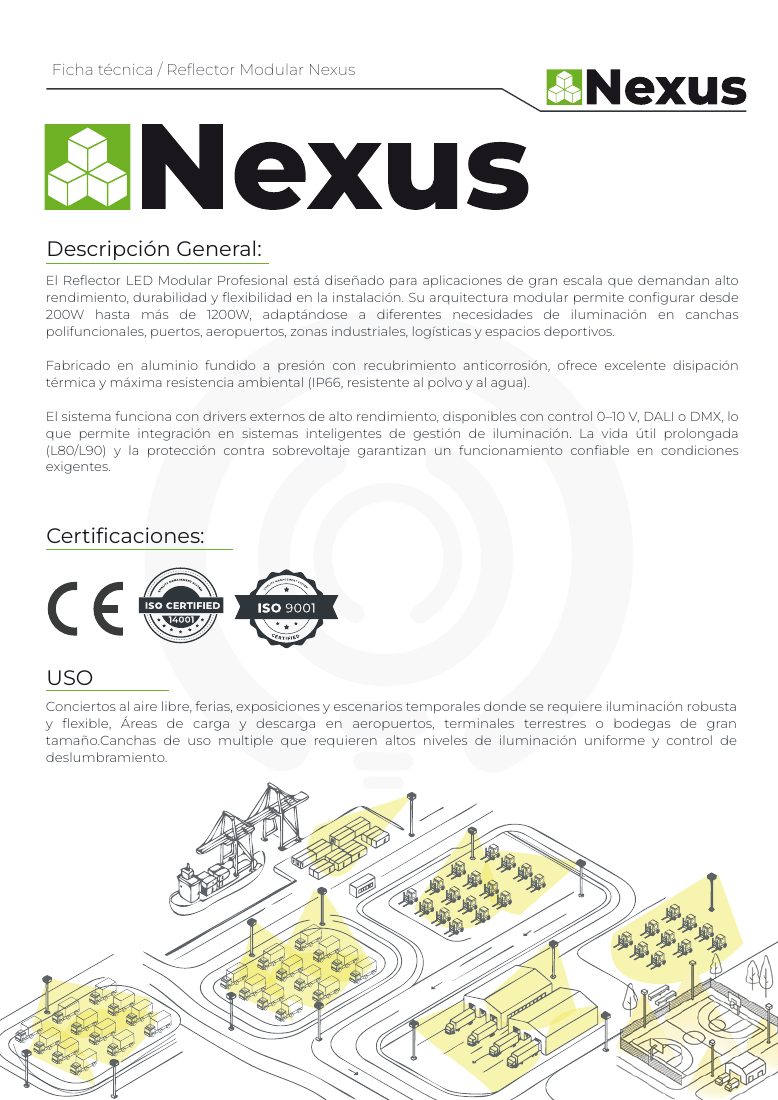
- Spec sheets55 technical sheets from the same fields
- PackagingDielines and master boxes for factories in China
- LabelsBarcode per variant, master label standard
- QR pagesA public product page for every SKU
- QuotesOffers and pre-sales built from product data
Key decisions and trade-offs
- 01
One product master as the source of truth
A single table of 514 SKUs and 26 fields: electrical, photometric, mechanical, packaging, warranty, plus hero photo, diagram and polar curve. Every output reads from it instead of being edited by hand.
Trade-off More work up front cleaning and normalizing supplier data. In return, a spec fix happens once and reaches every touchpoint.
- 02
Templates instead of one-off layouts
Catalog pages and labels are templates with data fields: InDesign data merge, plus a custom Illustrator script I wrote that fills {{Column}} placeholders from a CSV.
Trade-off Less layout freedom per product. Much faster, and the 227-page catalog stays consistent from first page to last.
- 03
QR codes that depend only on the SKU
The code encodes the SKU, not the content. Labels go to print before a product page is finished, and the page fills in later without reprinting. Empty fields are simply hidden.
Trade-off The public domain has to be fixed before the first print run: change it and every printed code breaks.
- 04
Designed for the factory floor
QR printed in brand charcoal on white with error-correction level Q, so it still reads with about 25% of the code damaged, on label material we tested for adhesion.
Trade-off Less visual freedom on the label. It has to survive ten years on a luminaire, not look good in a mockup.
- 05
One catalog per audience
Instead of one book for everyone: a full technical catalog for distributors, a projects catalog (also in English) for specifiers, and separate profile and decorative catalogs.
Trade-off More documents to keep in sync, which only works because they all draw from the same master.
The work


A QR on every product
Each luminaire carries a code that opens its own public page: specs, warranty, master box and a quote button on WhatsApp. The goal is that every product stays identifiable, with a record that lasts its ten-year life. Registering products at assembly went from about two hours to under fifteen minutes.

Outcome
- 3 days → under 30 minto put together an offer or pre-sale quote
- 2 h → under 15 minto register products for traceability at assembly
- $200K in one dayagainst a typical ~$5K day, closing a month-long pre-sale built on AI product imagery. The container was sold out before it arrived.
- Promotedto Director of Design & Marketing, January 2026, for the automation work
Tools
Adobe Illustrator and InDesign · ExtendScript · Python · Vercel · generative AI for product imagery · WhatsApp sales agent on Jelou